- Empty cart.
- Continue Shopping
The Day After the Fair
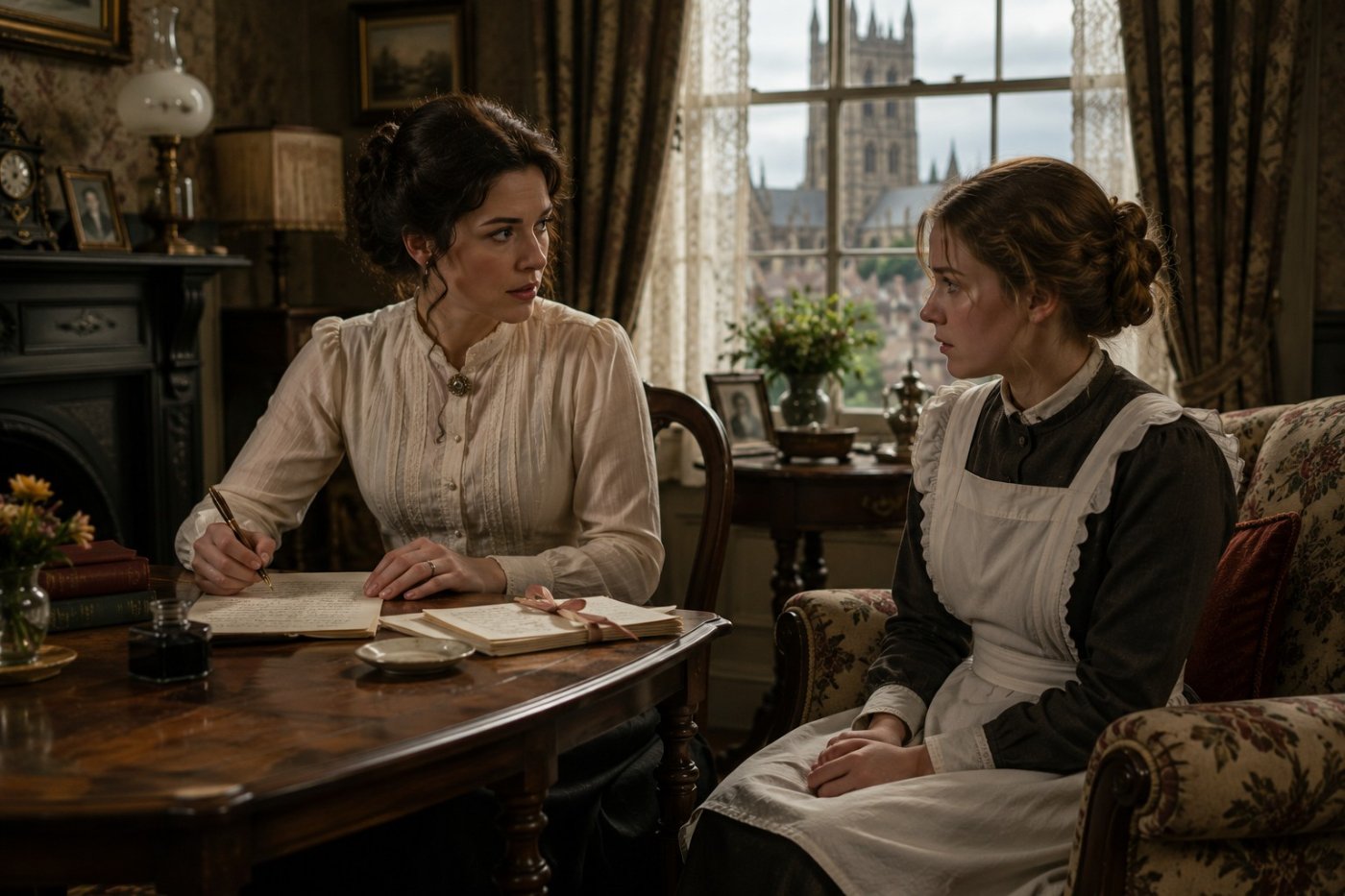
Two-hander · Drama
The Day After the Fair
The Day After the Fair · Frank Harvey adapted from a short story by Thomas Hardy
1 / 1
The Day After The Fair
Published by scriptsandsketches.com

In a tense exchange, Edith confronts her maid Anna about the letters she has been writing to a young man, revealing deep emotions and hidden truths about love and identity.
Duologue
Characters: EDITH, ANNA
In the front room of the Harnhams' house in a West Country cathedral city, EDITH is helping her maid ANNA write letters to a young man.
EDITH:
Let me see what you've done.
ANNA:
I am, ma'am, truly I am. It's just that I can't do it like you, ma'am.
EDITH:
But with the copy staring you in the face surely it's not too much to ask you to spell the words correctly. Look, you've left the ‘e’ out of Charles all the way down the page.
ANNA:
Have I, ma’am?
EDITH:
Yes, you have.
ANNA:
I didn't mean to, ma'am.
EDITH:
It's just carelessness. The fact is you're not putting your mind to it. (Desperately) and you must, Anna, you must! I'd have thought, for the sake of someone you say you love, you'd have been only too anxious to work hard at your writing. If you're not prepared to make even this small sacrifice, then what kind of a wife are you going to be, Anna?
ANNA:
(Rather sullenly) Once you're married, what'll it all matter?
EDITH:
That may well be something you’ve yet to discover. But you're not married, Anna - not yet. There are nearly four more weeks until the wedding-day, and that means at least seven or eight more letters have still to be written. Who is going to write them?
ANNA:
Well - you'll have to, ma'am, I suppose.
EDITH:
Oh, if only you'd made more progress, Anna. Even if I'd had to help you with the sentiments, at least you could have written the letters yourself. As it is - (She drops the copy-book onto the desk) - there's only one thing I can do.
ANNA:
How do you mean, ma'am?
EDITH:
He must be told, of course. He must be told everything.
ANNA:
(Alarmed) No, ma'am.
EDITH:
(Firmly) He must be told that all this time, I've been answering his letters for you.
ANNA:
But why, ma'am? Why do you have to tell him now?
EDITH:
Because, once you're married, he's bound to find out - sooner or later. Then think of all the miserable recriminations that would begin . . .
ANNA:
But if you tell him now, ma'am, he might change his mind and not marry me at all.
EDITH:
That should be for him to decide, Anna. And the poor fellow must be given the opportunity to do so in the full knowledge of all the circumstances.
ANNA:
(Distressed) Oh, ma'am! But what would I do? What would happen to me? I think if he was to change his mind now I'd - I'd make an end to myself.
EDITH:
Anna! Don't ever say such a wicked thing
ANNA:
I would, ma'am. For what kind of a life should I look forward to?
EDITH:
But can't you see that a marriage built on a deceit, on a mere trick, if you like - because that's how it'll seem to him - could so easily become the most bitter and loveless existence imaginable?
ANNA:
But once we're married, I shan’t need to worry about the old letters because I know, from going with him, I can make him happy. I know that. And at those times, ma'am, he's never bothering himself about grammar or spellin’ or fine words or any things like that.
EDITH:
(Stung) There are other times to consider, Anna. And let me tell you this: it was the letters and only the letters that made him decide to marry you.
ANNA:
No! No, it wasn't, ma'am, it wasn't.
EDITH:
My letters, Anna.
ANNA:
But it's me he wants - not old letters. Over and over, he's told me that. It's me.
EDITH:
Oh yes, in a physical sense, I'm sure he finds you wholly desirable. I don't doubt that for a moment. But to give his sudden passion some lasting value, he was looking for something more. Well, he found it - in my letters.
ANNA:
You say that.
EDITH:
He told me. (ANNA is deeply upset.) So now you see, don't you, how terribly wicked it would be not to tell him the truth? (A sullen silence from ANNA) You do see, don't you?
ANNA:
(Stoutly) No, I don't see. How can letters matter; how could they set beside what the two of us have been to each other?
EDITH:
If you'd shown more concern for what was written in the letters instead of leaving it all to me, you'd not ask such a foolish question.
ANNA:
I tried - I did try to at the start, only in the end they were always written your way.
EDITH:
Yes, but his letters? Why, apart from wanting to know when he was coming again, you've never shown the slightest interest in his letters, either.
ANNA:
It's just that I've grown to feel they're not much to do with me.
EDITH:
No. And in a sense, they're not. But Mr Bradford doesn't feel that. Each letter from him has marked a step forward to which I always had to respond. So it's not you he's come to know, Anna, but me.
ANNA:
Only in his head. But me - he knows me. He really knows me. He's never even touched you.
EDITH:
I don't care, Anna. I cannot go on. I shouldn't go on. And it's not only him I'm thinking of - I'm thinking of the effect it's having on me.
ANNA:
On you, ma'am?
EDITH:
Yes.
ANNA:
But it can't have any effect on you, ma'am.
EDITH:
How can you say that?
ANNA:
Because . . .
EDITH:
Well?
ANNA:
Because you're married already.
EDITH:
Oh, you poor, stupid little fool! Can't you see what it's meant to me to have had to write to this man for weeks on end? And to write in terms which are now virtually those of a wife? Can't you see? To have had to lay bare my deepest, most intimate feelings and then - oh, God! - pretend - pretend to a physical condition which, in fact, isn't mine at all? Can you imagine what that's meant to me and still say it can't have had any effect on me?
ANNA:
But, ma'am . . .
EDITH:
Every letter from him, I read as if it were meant for me. Every letter I wrote was written from my heart and nobody else's. And I won him, Anna. I won him.
ANNA:
(Desperately) You didn't! You didn't!
EDITH:
(Almost shouting in Anna’s ear) Do you think a man like him would have let himself be captured by a common, ignorant servant girl? (ANNA flinches and hides her face) Those were my thoughts and my feelings he responded to, and for the first time in my life I feel I'm no longer alone. I've someone to love and care about - even though to him I'm hardly so much as a name. But it cannot go on - it cannot go on. (EDITH, overcome, sinks down and sobs. For a moment ANNA struggles mentally with the dimly perceived implications of EDITH's words, then she moves quickly to her mistress and kneels beside her)
ANNA:
I haven't rightly understood. But now I see - of course. (Pause) You love him too, don't you?

